
兰州: Exploring the Cultural and Natural Wonders of Lanzhou
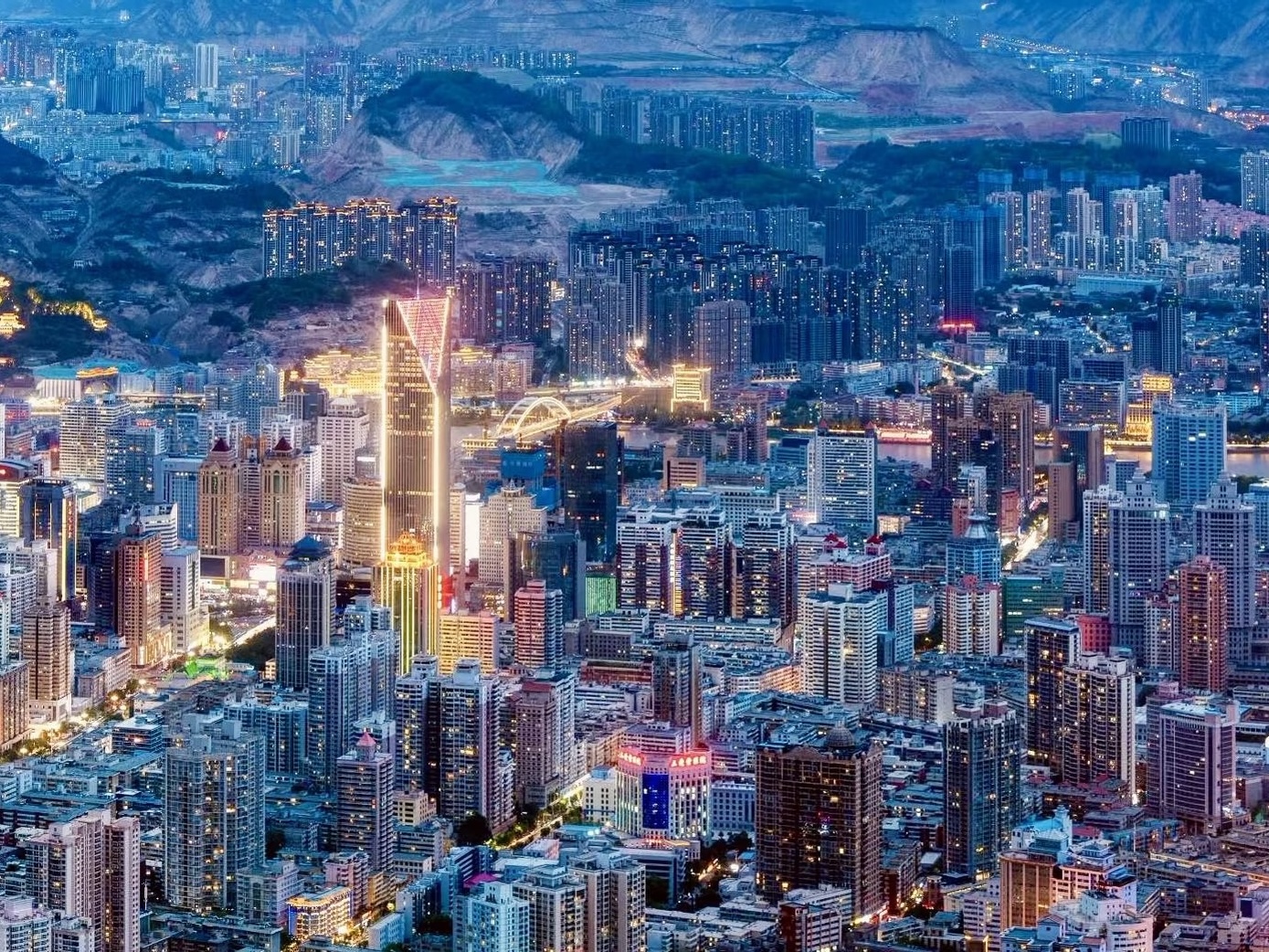
Lanzhou, the capital of Gansu Province, is a key city in northwest China and an important gateway along the ancient Silk Road. Stretching along the Yellow River, it is the only provincial capital through which the river flows, giving the city a unique landscape and cultural identity. With a history of over 2,000 years, Lanzhou has long served as a crossroads for trade, culture, and ethnic exchange between East and West.
Lanzhou’s tourism resources combine natural scenery, historical landmarks, and cultural heritage. Visitors can explore iconic sites such as the Zhongshan Bridge and the Yellow River Mother Sculpture, both reflecting the city’s deep connection to the Yellow River. Cultural attractions like the White Pagoda Mountain and Lanzhou Museum showcase its rich history, while Qingcheng Ancient Town offers a glimpse into traditional life. Together, these elements make Lanzhou a destination rich in history, culture, and scenic charm.
The Places You Absolutely Must Visit
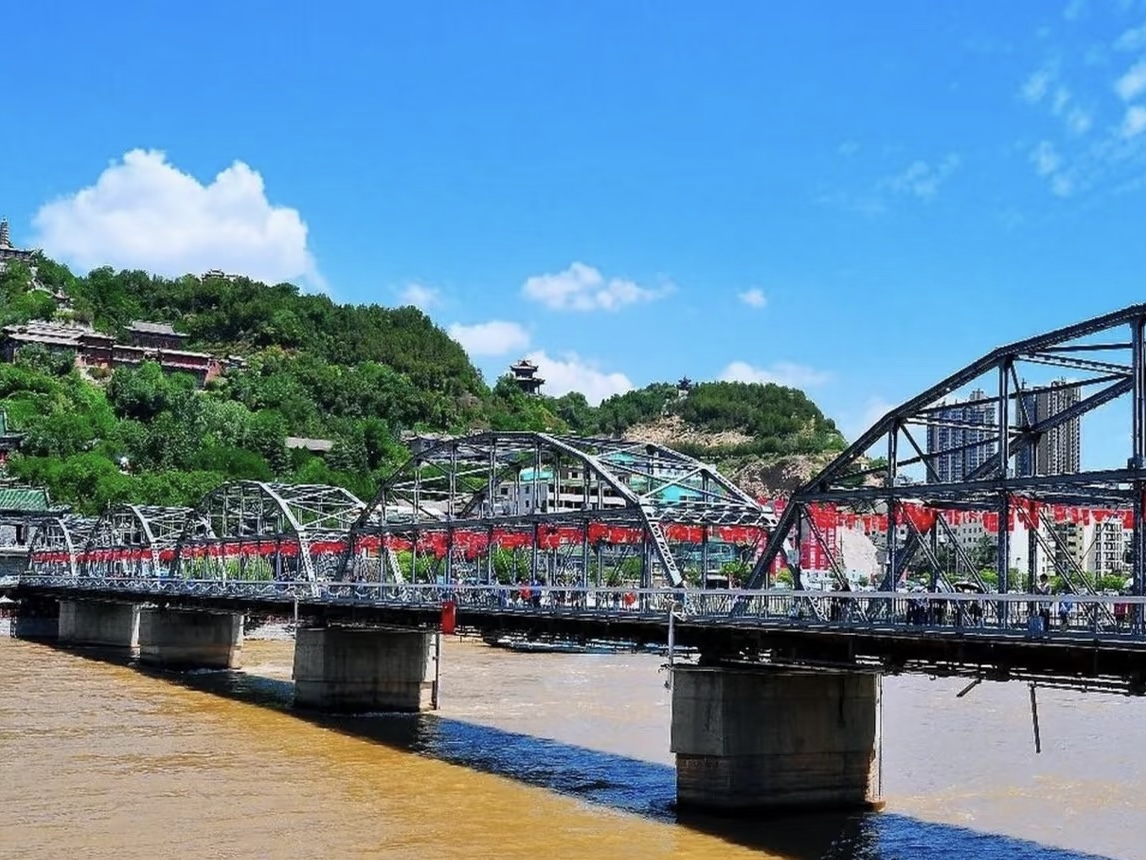
Zhongshan Bridge (Yellow River Iron Bridge) 黄河铁桥
click here to see the map pin📍
Zhongshan Bridge, commonly known as the Yellow River Iron Bridge, is one of Lanzhou’s most iconic landmarks and the first permanent bridge built across the Yellow River. Completed in 1909 during the late Qing Dynasty, it represents a significant milestone in China’s modern engineering history. The bridge’s steel structure, constructed with the assistance of foreign engineers, reflects a blend of Western industrial technology and local craftsmanship. Stretching gracefully over the Yellow River, it has long served as an important transportation link and a symbol of Lanzhou’s development.
Today, Zhongshan Bridge is not only a functional crossing but also a popular cultural and sightseeing spot. Visitors can walk across the bridge to enjoy panoramic views of the Yellow River and the surrounding cityscape, especially at sunset when the scenery becomes particularly striking. Nearby parks, riverside walkways, and local food stalls create a lively atmosphere, making the bridge an essential stop for experiencing Lanzhou’s history, urban life, and connection to the “Mother River of China.”
Bai Ma Guan 白塔寺

click here to see the map pin📍
White Pagoda Mountain, home to the historic Baita Temple, stands on the north bank of the Yellow River and offers one of the best viewpoints in Lanzhou. The temple was originally built during the Yuan Dynasty to commemorate a Tibetan Buddhist lama and has since become an important religious and cultural site. The white pagoda itself rises prominently above the surrounding greenery, creating a striking contrast against the landscape. The mountain area is filled with pavilions, halls, and quiet pathways that invite exploration.
Climbing White Pagoda Mountain provides not only a peaceful retreat from the city but also a rewarding visual experience. From the top, visitors can enjoy sweeping views of Zhongshan Bridge, the Yellow River, and Lanzhou’s skyline. The site beautifully combines natural scenery with historical architecture, making it a favorite destination for both tourists and locals. It reflects Lanzhou’s cultural diversity and its role as a meeting point of different traditions along the ancient Silk Road.
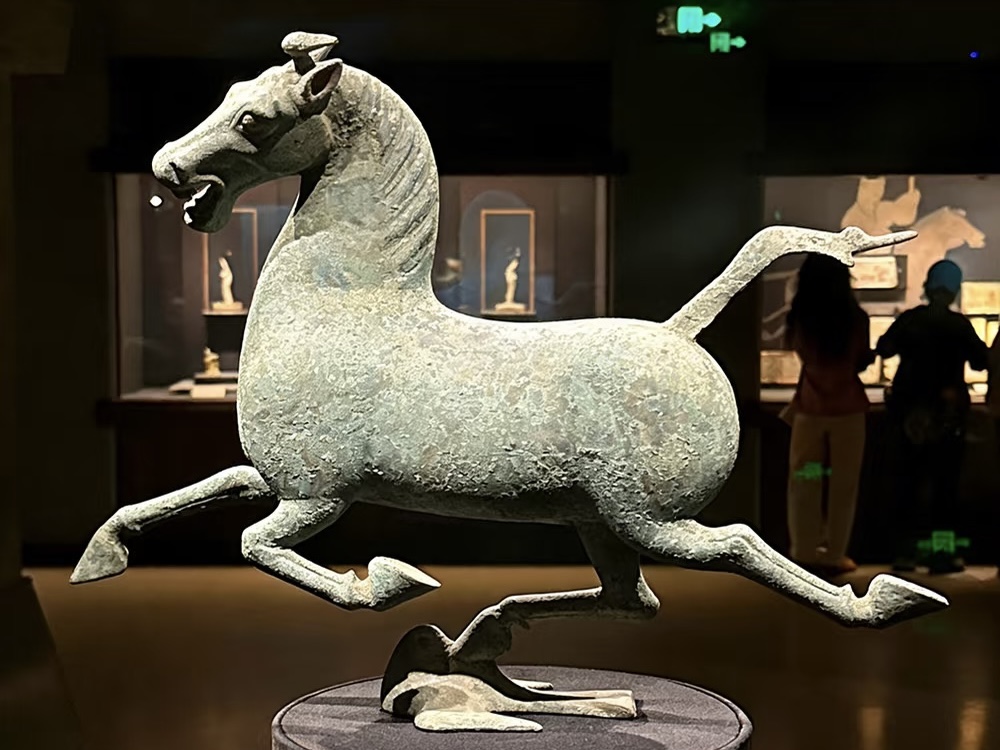
Lanzhou Museum 兰州市博物馆
click here to see the map pin📍
Lanzhou Museum is an important cultural institution that showcases the rich history of the city and the broader Gansu region. Its collections span from prehistoric times to the modern era, with exhibits featuring pottery, bronze artifacts, calligraphy, paintings, and relics from the Silk Road period. The museum highlights Lanzhou’s strategic position as a key stop along ancient trade routes, where cultures, goods, and ideas from East and West converged.
The museum’s exhibitions are thoughtfully organized to provide visitors with a clear understanding of regional history and cultural development. Through detailed displays and informative explanations, visitors can learn about ethnic diversity, historical events, and artistic traditions unique to this area. As an educational and cultural center, Lanzhou Museum offers a deeper perspective on the city beyond its landscapes, making it an essential stop for anyone interested in history and the legacy of the Silk Road.
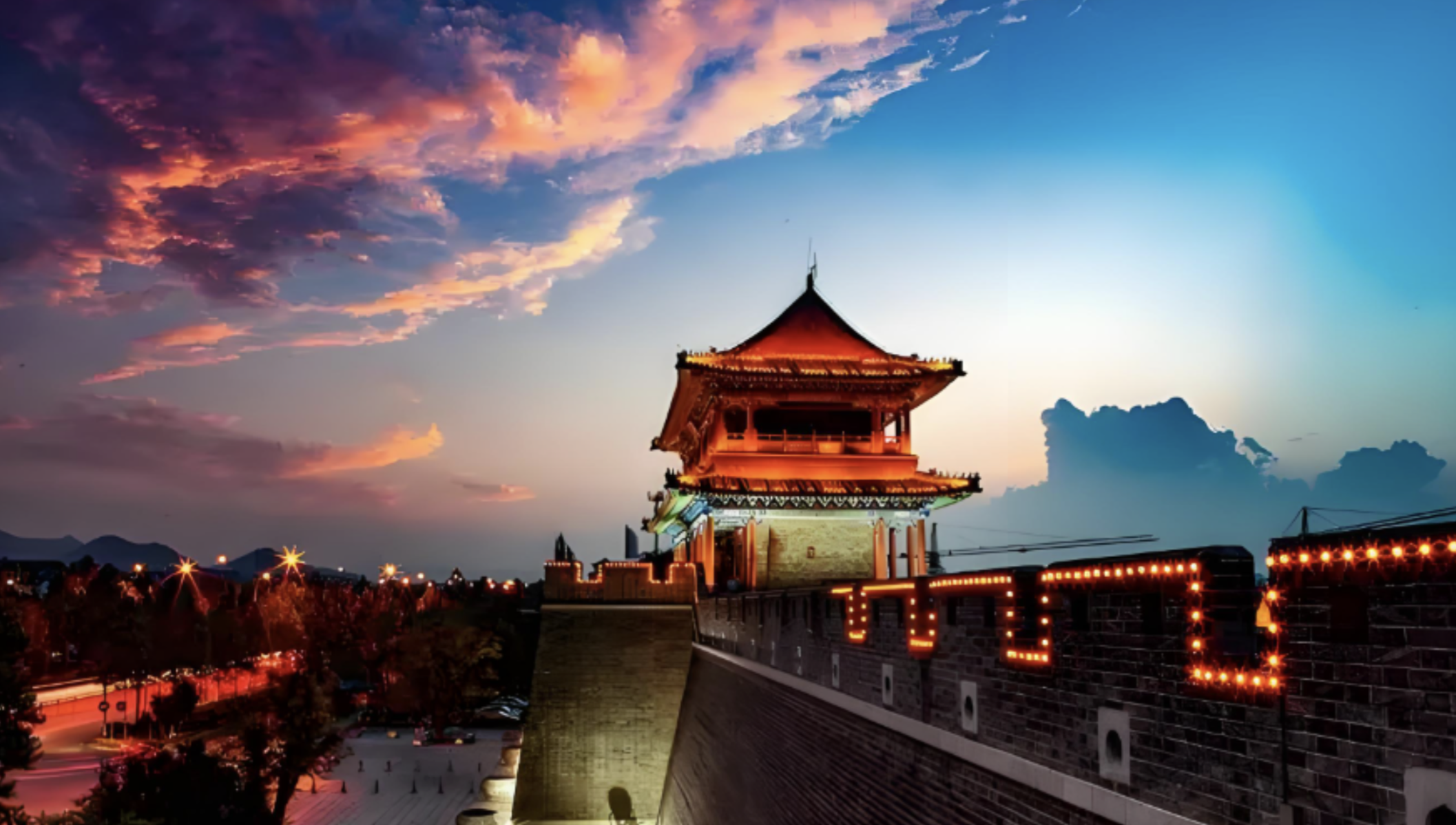
Qingcheng Ancient Town青城古镇
click here to see the map pin📍
Qingcheng Ancient Town, located along the Yellow River near Lanzhou, is one of the best-preserved historical towns in northwest China. With a history dating back over a thousand years, it features traditional architecture, narrow alleys, ancient courtyards, and well-preserved temples. The town once thrived as a commercial hub along the Silk Road, and its layout still reflects the prosperity of that era. Walking through its streets feels like stepping back in time.
Today, Qingcheng Ancient Town offers visitors a quiet and authentic cultural experience. Unlike more commercialized destinations, it retains a peaceful atmosphere where local life continues at a slow pace. Visitors can explore historic residences, ancestral halls, and old city gates while learning about traditional customs and rural culture. The surrounding natural environment, including views of the Yellow River, adds to its charm, making it a perfect destination for those seeking history, tranquility, and cultural depth.
The Yellow River Mother Sculpture 黄河母亲雕像

click here to see the map pin📍
The Yellow River Mother Sculpture is one of Lanzhou’s most famous landmarks, symbolizing the cultural and historical importance of the Yellow River, often called the “Mother River of China.” Located along the southern bank of the river, the sculpture was created in 1986 by artist He E and has since become an iconic representation of the city. The artwork depicts a reclining mother and a child, representing the nurturing spirit of the Yellow River and its role in sustaining Chinese civilization for thousands of years.
Beyond its artistic value, the Yellow River Mother Sculpture is also a popular public space where visitors and locals gather to relax and enjoy the riverside scenery. Surrounded by parks, walkways, and open spaces, it offers a peaceful environment for strolling and photography. The site provides beautiful views of the Yellow River, especially during sunset when the light enhances the sculpture’s form. As both a cultural symbol and a scenic spot, it captures Lanzhou’s deep connection to the river and its enduring legacy.
兰州 Cuisine
Lanzhou’s cuisine is deeply influenced by its location along the ancient Silk Road, blending flavors from different cultures while maintaining a strong northwestern Chinese identity. The food is known for its bold, savory taste, generous use of spices, and emphasis on halal traditions, as the city has a large Muslim population. Wheat-based staples such as noodles and flatbreads are central to daily meals, often paired with beef or lamb. Ingredients like chili oil, garlic, cumin, and vinegar create rich layers of flavor without being overly greasy. Lanzhou cuisine also values freshness and craftsmanship, especially in hand-pulled noodles and slow-cooked meats. Street food plays a major role in the local food scene, offering affordable and authentic dishes. Overall, Lanzhou’s food reflects its history as a cultural crossroads, combining simplicity, nourishment, and distinctive regional character.
Lanzhou Beef Noodles 兰州牛肉面
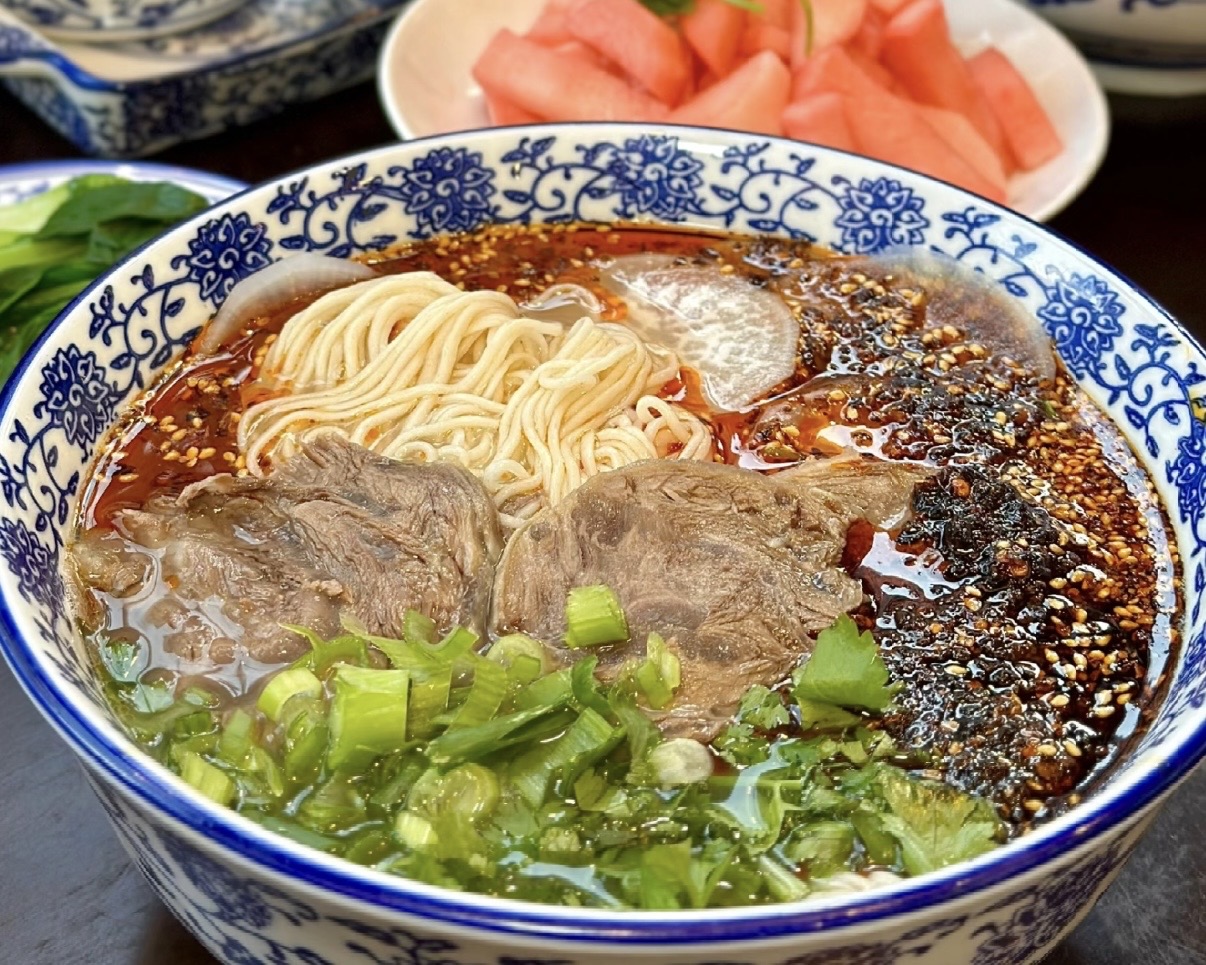
Lanzhou Beef Noodles are the city’s most famous dish and a symbol of its culinary identity. Known for the standard of “one clear, two white, three red, four green, five yellow,” the dish features a clear beef broth, white radish slices, red chili oil, green herbs, and yellow hand-pulled noodles. The noodles are made fresh to order, with varying thicknesses based on preference. Tender slices of beef complete the bowl. Light yet flavorful, Lanzhou Beef Noodles are enjoyed throughout the day and represent the precision and tradition of local cooking.
Lamb Skewers (Kao Yang Rou Chuan) 敦煌烤羊肉串
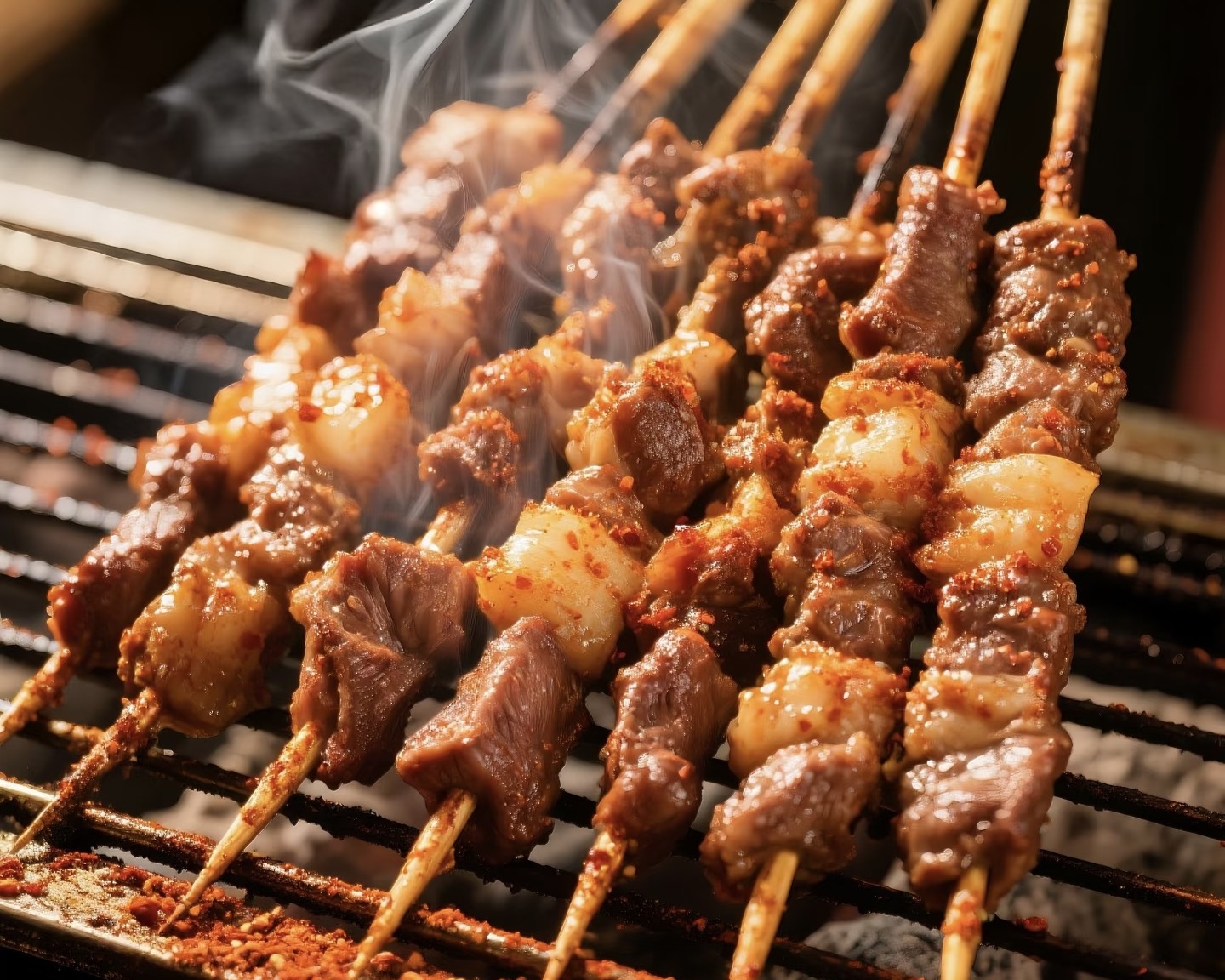
Lamb skewers are a popular street food in Lanzhou, reflecting strong influences from Muslim culinary traditions. Small pieces of lamb are threaded onto skewers, seasoned with cumin, chili powder, and salt, then grilled over charcoal. The result is tender, juicy meat with a smoky aroma and slightly crispy edges. The seasoning enhances the natural flavor of the lamb without overpowering it. Often enjoyed at night markets, lamb skewers are a social food, perfect for sharing. They capture the lively atmosphere of Lanzhou’s street culture and its love for bold, simple flavors.
Niang Pi (Cold Noodles) 酿皮
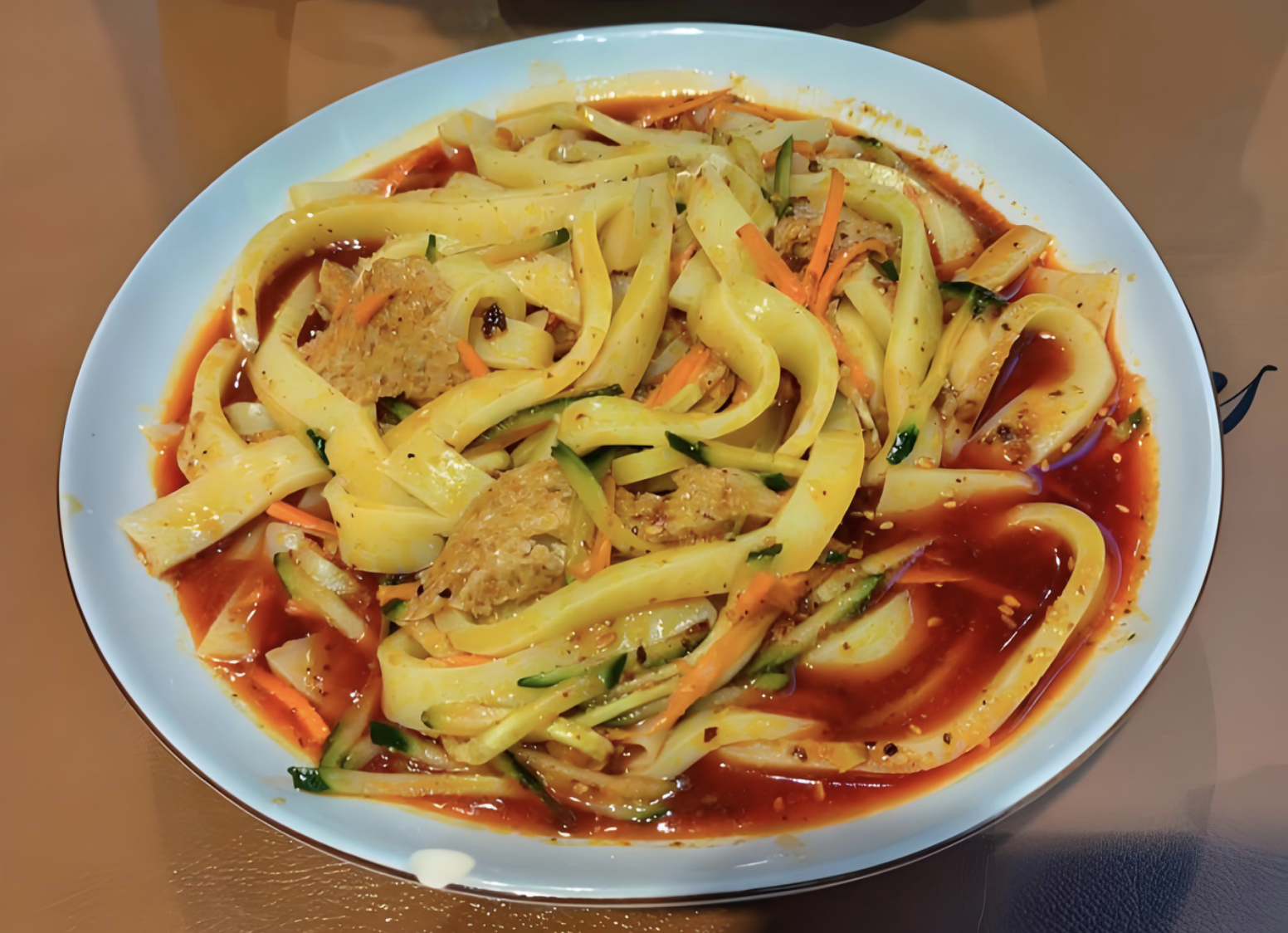
Niang Pi is a refreshing cold dish made from wheat or rice flour, popular especially during warm weather. The noodles have a smooth, slightly chewy texture and are served with sliced cucumber, bean sprouts, and gluten pieces. A flavorful sauce made of chili oil, garlic, vinegar, and sesame paste is poured over the dish, creating a balance of spicy, sour, and nutty tastes. Light yet satisfying, Niang Pi is often eaten as a snack or light meal. It reflects Lanzhou’s ability to create diverse textures and flavors from simple ingredients.
Milk Egg Fermented Rice (Niunai Jidan Laozao) 牛奶鸡蛋蛋醪糟
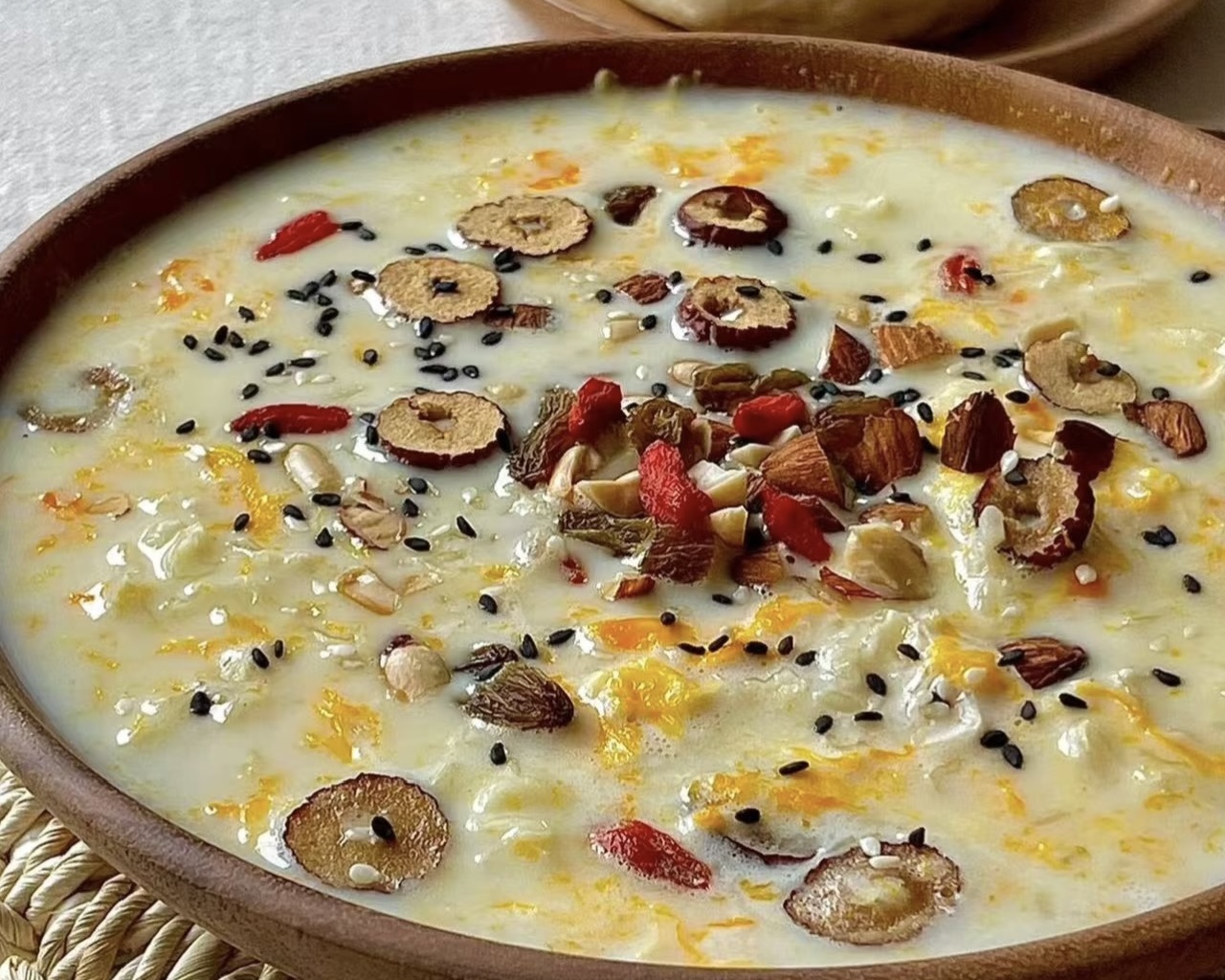
Milk Egg Fermented Rice is a traditional sweet dish in Lanzhou, combining fermented glutinous rice with milk and egg. The dish is gently heated, allowing the egg to form soft strands while blending with the slightly tangy, sweet flavor of the fermented rice. The addition of milk creates a smooth and comforting texture. Often enjoyed as a dessert or breakfast, it is both nourishing and easy to digest. This dish offers a softer, sweeter contrast to Lanzhou’s typically savory cuisine, highlighting the diversity of local food traditions.
Hand-Grasped Lamb (Shouzhua Yangrou) 手抓羊肉
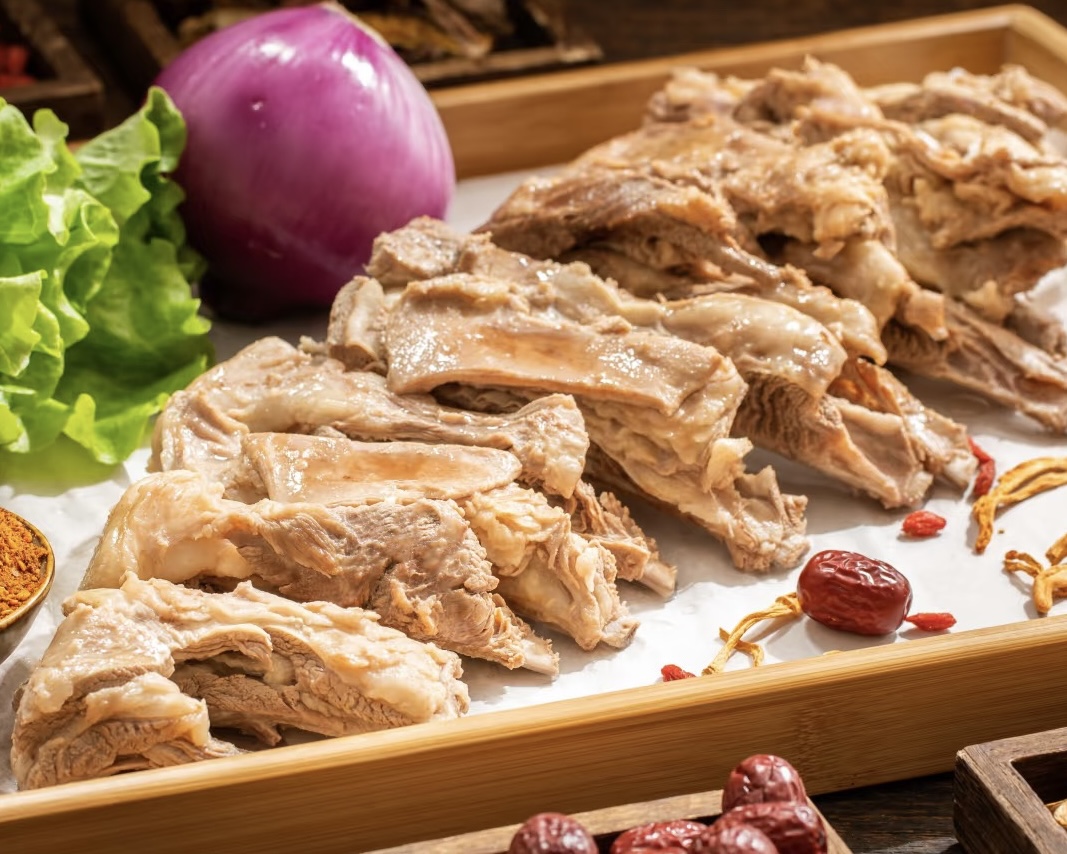
Hand-grasped lamb is a traditional dish widely enjoyed in Lanzhou and across northwest China. Large pieces of lamb are boiled or steamed with minimal seasoning to preserve their natural flavor. The meat is tender, juicy, and slightly fatty, often served with salt, garlic, or dipping sauces. As the name suggests, it is traditionally eaten by hand, emphasizing a rustic and communal dining experience. This dish reflects the region’s pastoral heritage and respect for quality ingredients. Simple yet rich, hand-grasped lamb showcases the authentic taste of northwest Chinese cuisine.
Best Time to Visit
The best time to visit Lanzhou is from May to October, when the weather is relatively mild and suitable for outdoor travel. During late spring and early summer, temperatures are comfortable, and the Yellow River scenery becomes more vibrant with greenery along its banks. This is an ideal time for walking along Zhongshan Bridge, visiting parks, and exploring nearby natural areas. The climate is generally dry, with plenty of sunshine, making it pleasant for sightseeing.
Autumn, especially from September to October, is considered the most comfortable season. The air is crisp, the sky is clear, and the temperature is neither too hot nor too cold. This period is perfect for visiting historical sites, ancient towns, and enjoying local food without the discomfort of extreme weather. Summer can be warm but is still manageable due to low humidity, while winter is cold and windy, making it less suitable for outdoor activities, though it offers fewer crowds and a quieter travel experience.
Transportation in 兰州
Lanzhou has a well-developed transportation system that makes it an important hub in northwest China. The city is served by Lanzhou Zhongchuan International Airport, which connects it to major domestic cities and some international destinations. As a key railway center, Lanzhou is linked by high-speed trains to cities such as Xi’an, Urumqi, and Beijing, making long-distance travel efficient and convenient.
Within the city, public transportation is reliable and affordable. Lanzhou Metro provides a fast way to travel across major districts, while buses cover extensive routes throughout the urban area. Taxis and ride-hailing services are also widely available. Due to the city’s narrow, river-valley layout along the Yellow River, traffic can be busy during peak hours, but overall, getting around Lanzhou is manageable for travelers.
A 3-Day Travel Itinerary
Day 1: Zhongshan Bridge and White Pagoda Mountain
Start your trip at the Zhongshan Bridge(兰州铁桥), the most iconic landmark spanning the Yellow River. Walk across the bridge and enjoy the riverside views, then explore the nearby parks and local food stalls. Continue to White Pagoda Mountain(白塔寺), where you can climb to the top for panoramic views of the city and the river. Along the way, visit historic pavilions and temple structures. End the day by returning to the riverside area to experience Lanzhou’s evening atmosphere and local cuisine.
Day 2: Lanzhou Museum and Yellow River Mother Sculpture
Begin your day at the Lanzhou Museum(兰州博物馆), exploring its extensive collection of artifacts that highlight the region’s Silk Road history and cultural diversity. In the afternoon, head to the Yellow River Mother Sculpture(黄河母亲雕像), one of the city’s most symbolic landmarks. Walk along the riverbank, take photos, and enjoy the relaxed environment while learning about the cultural meaning behind the sculpture. The surrounding park area is perfect for a peaceful stroll.
Day 3: Qingcheng Ancient Town
Take a day trip to Qingcheng Ancient Town(青城古镇), a well-preserved historic settlement near Lanzhou. Spend the day wandering through its narrow streets, traditional courtyards, and ancient buildings that reflect its past as a Silk Road town. Enjoy the quiet atmosphere, explore local shops, and try regional snacks. In the evening, return to Lanzhou and conclude your trip with a final taste of the city’s signature dishes.
Lanzhou offers a fascinating journey through history, culture, and cuisine,
 it a must-visit destination for any traveler.
